Could Canada’s auto sector transition to defence production?
cpac
Jun 14, 2025
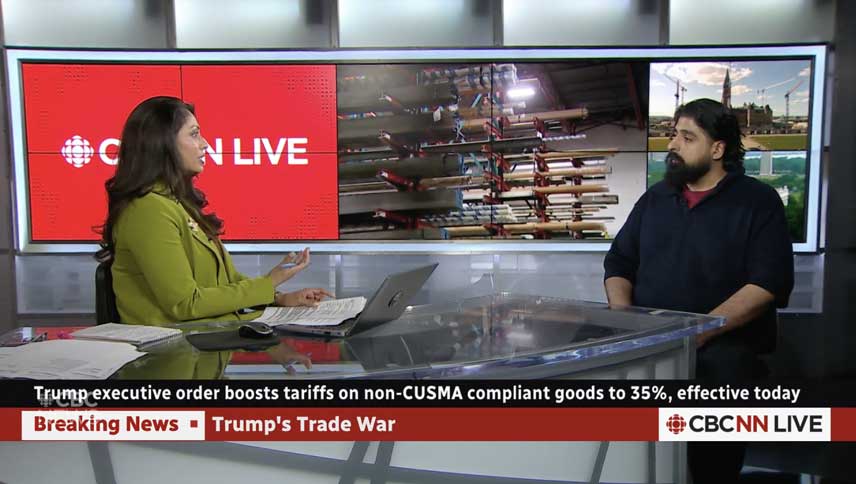
Michael Serapio: Well, to talk about these latest musings from the US President, we’re now joined by Flavia Volpe. He is the president of the Auto Parts Manufacturers Association. Flavia, good to see you. Thanks for being here.
Flavio Volpe: Thanks for having
Michael Serapio: me. So here we have Donald Trump talking about tariffs once again if, if in a perhaps wistful way.
Uh, there’s still no indication though that Canada will ever be free of tariffs or the threat of tariffs at the very least. And as a result, we, we do see, if not current production investment moving south of the border. It makes me wonder if Flavio, you know, has Trump’s tariffs already had the effect to, to kill future business in Canada.
Flavio Volpe: Well, we saw the April export numbers from Stats Can in Automotive and we’re down 23%. Uh, and that’s April’s numbers. Uh, may is gonna shock, uh, some people. It’s having the effect of dampening, uh, automotive production in Canada and in Mexico. It’s not raising automotive production in, uh, in the us And certainly, uh, it’s not moving production, but.
Forward investment decisions are being biased to the us. It’s not good. Uh, we worked hard, uh, and, uh, we successfully, uh, team Canada successfully got auto parts removed from the tariff list, but that’s only half of the parts that are, uh, made in Canadian factories. The other half go to Canadian production.
And if less cars are made here, that’s less parts that are made here. That’s less people who have a secure future here. Um, he’s, he is, uh, absolutely making an effect, uh, on, uh, Canadian, uh, automotive. And, uh, you know, we. We’re, we’re supporting the federal government in the hope that, uh, whatever grand bargain we can pull off with the Americans, we can get an exemption, A-U-S-M-C-A or a kuzma exemption on Canadian cars like we did on Canadian parts.
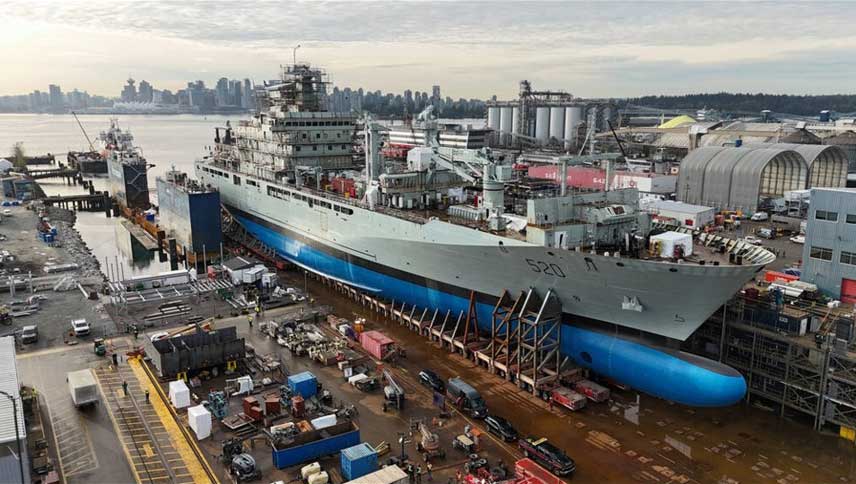
Michael Serapio: Mm-hmm. So, so that is the hope, as you say. But you, and I don’t have to tell you this because you said on the, the Candy US Advisory Council with the Prime Minister, uh, there has. Been talk in the last year or so about government procurement being used to offset some of the, the pain that’s been caused by these Trump tariffs, and we now have the industry minister this week talking about the automotive sector getting into defense production.
How attractive would that option be if the goal here is to save jobs in this country?
Flavio Volpe: Well, I think it’s good creative thinking, uh, adding, uh, defense production and procurement to some of these existing lines. You know, some of the, some of the vehicles that are qualify for, uh, defense purchasing, like, uh, from, uh, Rochelle in London, use a chassis, uh, that is, um, also a light truck chassis, uh, that can be made in Canadian assembly plants.
Um, we know that the product in Otro being made by General Motors, uh, the Silverado, there’s a light armored vehicle Silverado as well. You know, the one caution I say to everybody, we need to think creatively and, and add different products. Uh, but, uh, but defense volumes and, and engineering tolerances and pre-qualifying of suppliers is a completely different game than automotive.
So it’s a great addition. Uh, it’s not a good substitute. Uh, you’ll end up with very big contracts, uh, because military, uh, equipment costs a lot more than civilian equipment, but less actual vehicles being produced means, uh, that, uh, it’s not a good substitute for, uh. The parts suppliers or the tool makers, uh, in this country who need volume to keep their businesses going.
Michael Serapio: Okay. So, so as you say, not a substitute, but are perhaps a good addition to, to help industry go forward, if I’m hearing it correctly. But, you know, how quickly could assembly plants in this country, for example, retool itself for more defense production? Is, is that easily done?
Flavio Volpe: It’s not. Uh, but there are some of the assemblers here, like General Motors, as I said, in Oshawa on the same chassis, uh, make a military version.
And so, uh, that would, uh, not take too long. You’d have to make sure that those suppliers are qualified. Uh. Uh, to, uh, to, uh, build that vehicle here and a bunch of other different approvals that you do when you’re building a defense product that you wouldn’t, uh, uh, for a product that’s used, uh, by, uh, you and I on a daily basis, uh, to make other things like proper light armored vehicles that, you know, have been built for decades in London, uh, or uh, tanks and heavy armored vehicles.
That’s a longer process. You know, you’ve got to, just like when you land a car, uh, uh, assembly investment, you’ve got a, you’ve gotta, uh, uh, uh, build the product, acquire the factory, build the production line, um, approve all the engineering and then get it going. Uh, but I, I would be undaunted. I. Uh, uh, by the fact that, that these are longer timelines.
Make an investment today for, uh, uh, fruit that’s born three, five, ten years out. Those are lessons I think we need to learn from this current crisis where the White House has turned against Canada. Um, we may get through this crisis. We may make a deal, but it’s now, uh, uh, not just a theory for future presidents.
If they want to, uh, uh, you know, uh, put a thumb in Canadian eyes. Uh. You know, you’ve got the precedent and we know just how tough it is to get out from under that. So we should build some insurance in.
Michael Serapio: Build some insurance, as you say. You know, I, I, I think it’s interesting the moment that we’re in, because certainly going into the federal election campaign, there was talk about this need for a Team Canada response there.
There was some ance of that through the campaign, but as it came to voting day itself, it seemed to dissipate a bit. And I think there are some Canadians who think we might be beyond this crisis at this point. What would you say to that?
Flavio Volpe: Well, I, I think we’re still under the threat of tariffs in major, uh, industries in this country.
Uh, steel, aluminum, automotive. We still have the IPA tariffs, even though we have an exemption on ’em for the rest of the economy. There are a lot of goods in this. Economy that are not kuzma compliant for reasons that, you know, the customer doesn’t need it or they’re for export markets. Uh, in addition to, uh, the us, uh, it’s a major threat.
Uh, the president continues to muse as he did, uh, today, that, uh, you know, he, he, he could drop a new tariff at any time and a punitive tariffs, uh, and he doesn’t respect. Uh, uh, bilateral or multilateral agreements until such time that Canada makes a deal with the US that has enough meat on it from the Canadian offering that it would, uh, hurt the US to walk away from.
Uh, we are not out of this crisis. Uh, we have a, a very calm, uh, prime minister and senior leadership that’s doing a lot of high level discreet uh, negotiations. But those are negotiations without guarantees. And if the. Pm Who’s at the heart of it, is saying We shouldn’t relent. We should understand that we’re still in a crisis.
I think the rest of us shouldn’t get confused that even though his language is calm, we’re not past anything yet.
Michael Serapio: Flavia. Volpe, always appreciate the time. Thank you for this.
Flavio Volpe: Thank
Michael Serapio: you very much.
Source: https://youtu.be/vJ1CqjxQbk4